
Pearl

Pearl

Content

  1. 1. Introduction
  2. 2. Name, Origin and History
  3. 3. Characteristics
  4. 4. Varieties
  5. 5. Treatment and Care
  6. 6. Jewellery with Pearl
  7. 7. More gemstones in the lexicon

1. Introduction

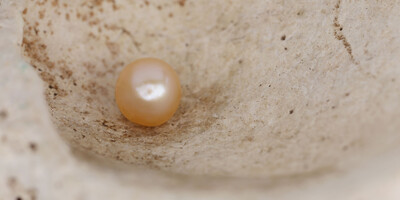
Pearls, those extraordinary products of nature, have always symbolised status, grace and perfection. In ancient times, they were called ‘tears of the gods’, derived from the marvellous teardrop shape that natural baroque pearls have. Freshwater cultured pearls are just as graceful as the pearls that fishermen once harvested from the sea or lakes.

2. Name, Origin and History

Name

Pearls are differentiated according to their origin, among other things, and there are the following main types of pearls: Akoya pearls, freshwater cultured pearls, South Sea pearls and Tahitian pearls. The pollution of their original habitat in the Sea of Japan has led to the Akoya pearl also being cultivated in China, Tahiti and Vietnam today. Freshwater cultured pearls come from China and Japan, while South Sea pearls are cultivated in Australia, Indonesia and the Philippines.

Origin

Pearls are differentiated according to their origin, among other things, and there are the following main types of pearls: Akoya pearls, freshwater cultured pearls, South Sea pearls and Tahitian pearls. The pollution of their original habitat in the Sea of Japan has led to the Akoya pearl also being cultivated in China, Tahiti and Vietnam today. Freshwater cultured pearls come from China and Japan, while South Sea pearls are cultivated in Australia, Indonesia and the Philippines.

History

For a long time, the pearl was one of the most valuable gemstones of all and thus a symbol of power, prestige, social status, and wealth. Over 2,000 years ago, pearls were the most valuable thing money could buy in ancient Rome. In the first century BC, Julius Caesar even passed a law that prohibited the lower classes from wearing pearls. Queen Elizabeth I of England was known as the "Pearl Queen" due to her passion for pearls. This historical appreciation of pearls is also reflected in religious history. In the New Testament (Matthew 13:45-46), Jesus compares the Kingdom of Heaven to a "precious pearl"; in the Quran (35:33), it is said that the Kingdom of Heaven has "gardens of eternal bliss, and those who enter shall be adorned with bracelets of gold and pearls." The opening of the first commercial pearl farm in 1908 by the Japanese noodle manufacturer Kokichi Mikimoto marked a turning point: although less professional pearl farming had been carried out in China for a longer time, Mikimoto was the first to cultivate perfectly round pearls. Since the 1960s, cultured pearls have become the market standard and are now an affordable luxury.

[ To Table of Contents ]

3. Characteristics

Characteristics

Pearls are either perfectly or almost perfectly spherical, symmetrical (uniformly oval or teardrop-shaped), or baroque (amorphous and uneven). Once freed from their shell, the shimmering beauty is ready to wear and does not require a lengthy polishing process. When assessing pearls, their origin is decisive, as pearls from different regions vary in quality and price. In addition to the type of pearl, other key factors include basic colour, translucency, lustre, surface purity or texture, size, shape and symmetry, as well as the orient. There is an almost unlimited range of basic pearl body colours: apricot (yellowish-orange), black, blue, bronze (reddish-brown), champagne (pinkish-yellow), chocolate brown, cream, gold, green, grey, orange, peach (pinkish-orange), plum (reddish-violet), purple, red, violet, white, yellow, and all shades in between. The ‘orient’ or ‘intermediate tone’ is the secondary colour of the pearl and, together with the lustre, distinguishes the finest specimens. This intermediate tone of translucent colours moves over the basic colour of the pearl body, accentuating, contrasting, and enhancing the depth and brilliance of a pearl. ‘Orient’ originates from the Latin word “oriens,” which means “the rising of the sun,” aptly describing this effect. While the orient is typically monochrome, the number of colours that can ultimately be seen, and their intensity, depend on the species of pearl and its nacre. The lustre is also influenced by the thickness of the nacre, but beyond that, the surface condition of the pearl is significant. A pearl with a smooth, silky surface reflects light much better and more evenly than one with pronounced imperfections.

[ To Table of Contents ]

4. Varieties

Find out more about the fascinating variety and timeless beauty of different pearls, each of which epitomises elegance and sophistication

[ To Table of Contents ]

5. Treatment and Care

Beads should be cleaned carefully with a damp cloth.

Pearl (Mystic Keshi Pearl)

Treatment bleaching explanation Generally used to emphasise and improve colour Care Instructions After each wear, wipe beads with a soft cloth to prevent the build-up of oils or other substances. If necessary, clean gently with a damp cloth. Steam Cleaning No Ultrasonic Cleaning No

Pearl (Silver Keshi Pearl)

Treatment None or dyeing explanation Occasionally used for colour enhancement Care Instructions Avoid contact with acids, chemicals, alcohol and heat. After each wear, wipe beads with a soft cloth to prevent the build-up of oils or other substances. If necessary, clean gently with a damp cloth. Steam Cleaning No Ultrasonic Cleaning No

Pearl (Silver coloured Freshwater Cultured Pearl)

Treatment Dyeing explanation Generally used to emphasise and improve colour Care Instructions Avoid contact with acids, chemicals, alcohol and heat. After each wear, wipe beads with a soft cloth to prevent the build-up of oils or other substances. If necessary, clean gently with a damp cloth. Steam Cleaning Yes Ultrasonic Cleaning Yes

Pearl (Black Mabe Pearl, Mabe Pearl)

Treatment May also be bleached, dyed, chemically treated or irradiated. These Pearls are also classified as composite gemstones. explanation Used for production. Other optional treatments are occasionally used to improve and/or change the colour and/or create uniformity. Care Instructions After each wear, wipe beads with a soft cloth to prevent the build-up of oils or other substances. If necessary, clean gently with a damp cloth. Steam Cleaning No Ultrasonic Cleaning No

Pearl (Blue Freshwater Cultured Pearl, Blue Mabe Pearl, Golden Freshwater Cultured Pearl, Mystic Freshwater Cultured Pearl, Red Freshwater Cultured Pearl)

Treatment Dyeing explanation Generally used to emphasise and improve colour Care Instructions After each wear, wipe beads with a soft cloth to prevent the build-up of oils or other substances. If necessary, clean gently with a damp cloth. Steam Cleaning No Ultrasonic Cleaning No

Pearl (Black Freshwater Cultured Keshi Pearl, Golden Kabira South Sea Pearl, Keshi Pearl, Peach-coloured Ming Pearl, Pink Ming Pearl, Platin Akoya Pearl, Purple Ming Pearl, Rainbow Freshwater Cultured Pearl)

Treatment None explanation N/A Care Instructions After each wear, wipe beads with a soft cloth to prevent the build-up of oils or other substances. If necessary, clean gently with a damp cloth. Steam Cleaning No Ultrasonic Cleaning No

Pearl (Akoya Pearl, Freshwater pearl, Golden South Sea Pearl, Imperial Pearl, Kasumigaura Baroque Pearl, Kasumigaura Pearl, Ming Pearl, Royal Peach-coloured Ming Pearl, Royal Pink Ming Pearl, Royal Purple Ming Pearl, Royal White Ming Pearl, Silver South Sea Pearl, South Sea Pearl, Tahitian Pearl, White Freshwater Cultured Pearl, White South Sea Pearl)

Treatment Bleaching, dyeing, chemical treatment or irradiation. Most pearls are cultured pearls. explanation Used to change, improve and/or uniform the colour. Care Instructions After each wear, wipe beads with a soft cloth to prevent the build-up of oils or other substances. If necessary, clean gently with a damp cloth. Steam Cleaning No Ultrasonic Cleaning No

[ To Table of Contents ]

6. Jewellery with Pearl

More jewellery with Pearl in our Online-Shop

7. More gemstones in the lexicon

[ To Table of Contents ]

Privacy Policy

We use cookies in order to present Juwelo in an optimal way and to improve our website. By clicking on the "Accept" button, you agree to the use of cookies, decline the use of cookies or decide which type of cookies you want to accept. For more information about cookies, please see our privacy policy.

You can find all the information about the services listed in our Privacy Policy and the Consent Settings.

Essential

on

For basic website functions, e.g. Login and settings.

Functional

on off

Certain media content such as videos and usage analysis of the website.

more details less details

  • Sentry

    on off

    Error analysis: to automatically record and anonymously analyse any programming errors that occur on our website. This serves to optimise the technical performance and security of our site. Functional Software Inc. d/b/a Sentry, 45 Fremont Street, 8h Floor, San Francisco, CA 94105, US

  • Juwelo

    on off

    Personalisation: by using randomly generated values, the website can recognise visitors and thus offer content that is particularly well suited to them. Juwelo Deutschland GmbH, Erkelenzdamm 59/61, 10999 Berlin, DE

  • Google Analytics

    on off

    Visitor analysis: to analyse user behaviour on our website anonymously in order to continuously optimise our offering for you. Google Ireland Limited, Gordon House, Barrow Street, Dublin 4, Irland, Google LLC, 1600 Amphitheatre Parkway, Mountain View, CA 94043, US

  • Hotjar

    on off

    Visitor analysis: to analyse user behaviour on our website anonymously in order to continuously optimise our offering for you. Hotjar Limited, Dragonara Business Centre 5th Floor, Dragonara Road, Paceville St Julian's STJ 3141, MT

Marketing

on off

Marketing partners, also from non-EU countries, with whom we can carry out advertising campaigns and measure their success.

more details less details

  • Google Ads

    on off

    Remarketing and personalised advertising using data matching: analysis of user behaviour on our website (e.g. products viewed). We also transfer pseudonymised customer data (including hashed email addresses, postal addresses and other purchase data) in order to display personalised advertising to you on the operator’s services and websites and to create similar target groups. Google Ireland Limited, Gordon House, Barrow Street, Dublin 4, Irland, Google LLC, 1600 Amphitheatre Parkway, Mountain View, CA 94043, US

  • Facebook Ads

    on off

    Remarketing and personalised advertising using data matching: analysis of user behaviour on our website (e.g. products viewed). We also transfer pseudonymised customer data (including hashed email addresses, postal addresses and other purchase data) in order to display personalised advertising to you on the operator’s services and websites and to create similar target groups. Facebook Ireland Ltd., 4 Grand Canal Square, Grand Canal Harbour, Dublin 2, IE

  • Criteo

    on off

    Remarketing and personalised advertising using data matching: analysis of user behaviour on our website (e.g. products viewed). We also transfer pseudonymised customer data (including hashed email addresses, postal addresses and other purchase data) in order to display personalised advertising to you on the operator’s services and websites and to create similar target groups. 32 Rue Blanche, 75009 Paris, FR

  • Bing Ads

    on off

    Sales analysis: to measure the success of our advertising campaigns. This involves recording, in pseudonymised form, whether a purchase was made on our website following a click on an advertisement. Microsoft Corporation, One Microsoft Way, Redmond, WA 98052-6399, US

Close and save settings Accept all Edit
Now LIVE